Enjoy free U.S. shipping on orders of $150 or more after discounts.
You can learn quite a lot about a character before anyone speaks. A collar buttoned to the throat, a jacket that looks borrowed, a dress chosen to make an entrance: clothes supply information that dialogue may never spell out. That is part of the pleasure of watching a beautifully costumed film. The wardrobe has opinions.
Period films add another layer. Their clothes have to suggest a world removed from ours while helping us understand the people living in it. Historical research matters, but so do character, movement, lighting and the visual language of the film. A costume can be persuasive on screen without being a literal reconstruction of everything someone would have worn in that year.
For a look behind that process, the V&A’s conversations with Hollywood costume designers include Deborah L. Scott discussing Titanic. They are a useful reminder that the finished outfit belongs to a much bigger piece of storytelling.
That distinction matters when we borrow from movies. Breakfast at Tiffany’s and The Devil Wears Prada offer plenty of wardrobe inspiration, but they are not examples of films reconstructing a distant historical period. And a film made in an earlier decade is not automatically a period film. Its clothes may instead show how that moment chose to present itself.
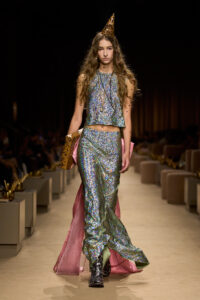
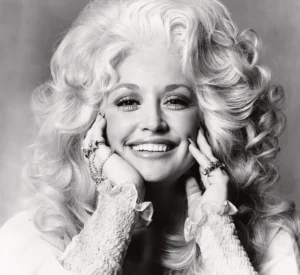
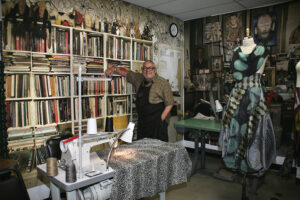
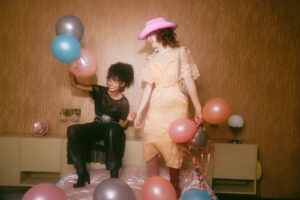
The photographs accompanying this article are illustrative fashion images, not authenticated stills or screen-worn costumes from the films discussed.
Sometimes it is one color. Sometimes it is the way a skirt moves. In Atonement, Jacqueline Durran’s green gown makes a compelling case for letting a single dress hold the room. The V&A’s Hollywood Costume exhibition included that dress among its examples of memorable screen costume. You do not need its exact cut to take something from it. Try an unusually saturated evening color, then give it a little breathing room: one pair of earrings, a small bag, shoes that let you move.
The Great Gatsby offers another route into dressing for an entrance. Catherine Martin’s costumes for the 2013 film included a pink suit and a white dress documented in the Academy’s Hollywood Costume exhibition checklist. The useful lesson for an ordinary wardrobe might be the confidence of a pale suit, or the contrast between a clean shape and elaborate surface detail. A beaded top with wide trousers can supply enough party without a headband, gloves and a whole supporting cast.
Then there is the pleasure of excess. Sofia Coppola’s Marie Antoinette belongs in a much longer conversation between historical dress and contemporary imagination. The V&A’s exploration of Marie Antoinette style brings screen costume into dialogue with designers including Vivienne Westwood and Dior. In your own closet, that invitation might be as small as a ribbon, a decorative shoe or a softly colored blouse worn with something much tougher.
These are styling possibilities, not evidence that a particular movie caused every subsequent trend. Films, designers, archives and the people wearing the clothes all participate in the conversation. A familiar silhouette can resurface for several reasons at once. What matters when you get dressed is which part catches your eye, and why.
Start with the detail you would still like if you had never seen the film. Perhaps it is a strong shoulder, a narrow cardigan or a trouser that breaks generously over the shoe. Put that shape beside something you already wear. A structured vintage jacket over a plain T-shirt and relaxed denim can look wonderfully deliberate. A full skirt with a slightly oversized knit has a different energy from the same skirt with a fitted blouse and carefully matched accessories.
If you love the dressier side of old Hollywood, try changing the context. A small evening bag can go to dinner with jeans. A rhinestone brooch can sit on a utilitarian jacket. There is no need to reserve a good piece for a night grand enough to deserve it. Equally, if you enjoy a complete period-inspired look, wear it. The point is to choose the effect rather than feel trapped inside someone else’s reference.
Color is often the easiest experiment because it does not demand an entirely new silhouette. Wear a soft pink shirt under brown tailoring, or put a vivid green knit beside a dark skirt. Repeat a small amount of the color elsewhere if you want the outfit to feel connected. Let the shoes interrupt it if you would rather it feel a little less polite.
A dress resembling something in a film is not enough to establish when it was made. Revivals, reproductions and later alterations can all complicate the picture. When shopping vintage, look at the label, construction, closures, fabric and provenance together. An honest date range is more useful than a precise year chosen because the garment happens to resemble a favorite scene.
Fit needs the same attention. Compare garment measurements with a piece you own that fits in the way you want. Ask about fabric stretch, lining and any repairs, and consider whether the silhouette relies on structure you would actually be comfortable wearing. Our guide to vintage fit explains why a label size tells only part of that story. For a closer look at changing proportions, the 1940s and 1950s fashion guide is a useful companion.
Quirk’s pink fitted blazer with navy contrast is a good example of a piece doing several things at once: soft color, a defined shape and a darker detail that gives the eye somewhere to land. We would try it with dark straight-leg jeans and a plain white tee, letting the jacket supply the drama. Check the listing’s measurements and condition notes, including the disclosed small holes, before deciding it belongs in your wardrobe.
The exercise works with clothes you already own, too. Pick a film look you keep returning to and identify the one thing you love about it. Recreate that relationship of color or shape using your own pieces. Then change the shoes, loosen the styling or add the accessory the character would never have chosen.
A screen wardrobe has to serve its story. Yours gets to follow you to work, to the grocery store, to a very good dinner and occasionally somewhere you did not plan to go. Give it that freedom.

Fashion Stylist, Designer & Creative Director Quirk
Quirk BOUTIQUE, is located at 112 West 9th St. #200 Los Angeles, CA 90015
No matching labels. Try another name.